

Do you ever feel like you’re juggling school, homework, hobbies, and chores—and still struggling to keep up? You’re not alone. Many students feel overwhelmed trying to balance everything in their lives. Meanwhile, you might notice a classmate who always seems calm, happy, and ahead of their schoolwork. And you wonder—how do they do it?
Well, here’s the truth: it’s not about luck. It’s about being productive—and the good news is, you can learn how to be productive too.
In this blog, I’ll introduce you to a few simple but powerful productivity principles that can help you manage your time better, reduce stress, and become a more successful version of yourself.
 What is Productivity?
Productivity is a mindset. It’s about doing what matters—efficiently and with focus. Productive students don’t just work harder, they work smarter. They get things done faster, stay organized, and still make time for fun.
When you learn basic productivity tools, you’ll be able to:
- Use your time wisely
- Study with better focus
- Reduce stress and confusion
- Feel more confident during exams
Let’s explore the three most important productivity principles you need to know as a student.
 The PPT Power Trio: Planning, Prioritizing & Time Management
All productivity tips can be traced back to these three key skills:
- Planning
- Prioritizing
- Time Management
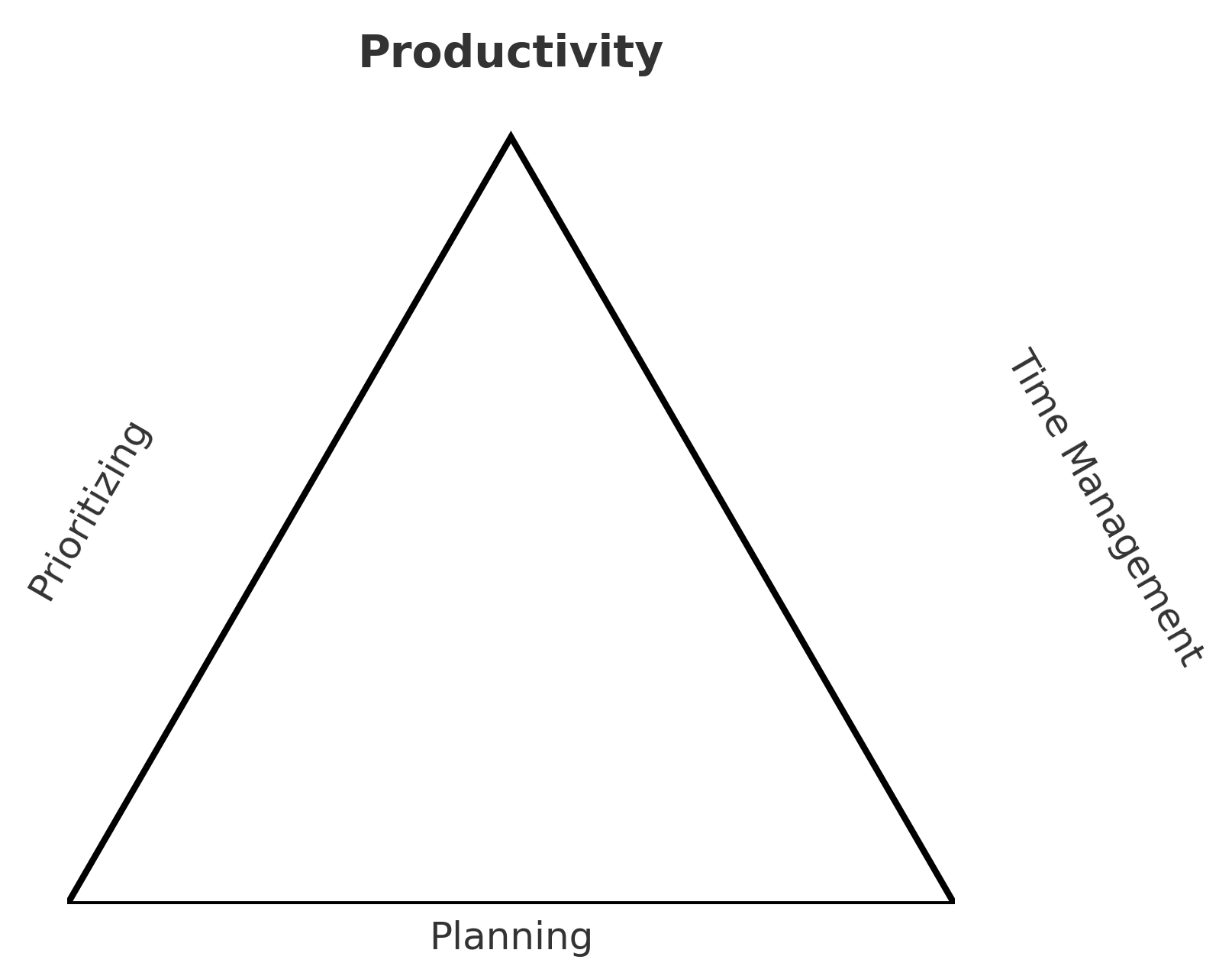
Let’s take a look at each of them.
 Planning: Your Personal Roadmap
Planning means thinking ahead. It’s like drawing a map for your day. A good plan helps you stay on track, finish tasks on time, and avoid last-minute stress.
Imagine a chef. To prepare a delicious dish quickly, they make sure all ingredients are ready before they start cooking. They don’t waste time searching for salt halfway through!
Just like that, planning your day helps you:
- Know what needs to be done
- Focus on one task at a time
- Avoid distractions
 Try this: Write down your major daily activities. For example:
- School
- Homework
- Exercise
- Reading
- Helping at home
- Social media / TV
Now, you have a clear list of different tasks. Once you know what your day looks like, it’s easier to manage your time wisely.
Prioritizing: What Matters Most Should be First
Once you have your list, it’s time to prioritize. That means deciding which tasks are most important—and doing those first.
Let’s say your day includes:
- Exercise
- Reading
- Helping your mom in the kitchen
- Watching TV
- Extracurriculars
At first, everything may seem equally important. But if you look closer, reading and exercise are likely more beneficial for your personal growth and well-being than watching TV.
 Sorted list:
- Reading
- Exercise
- Extracurriculars
- Helping at home
- Social media / TV
Having this visible—on a piece of paper or on your wall—helps you focus your attention where it matters most. Don’t just try to remember it in your head. A written list gives your mind clear directions.
 Time Management: Make Every Hour Count
Every student gets the same 24 hours. What makes some students stand out is how well they use that time.
Let’s break down your day into three broad parts:
- School time – Fixed hours (e.g., 7–3 PM)
- Sleep – Around 8 hours
- Free time – This leaves around 8 hours each day for everything else!
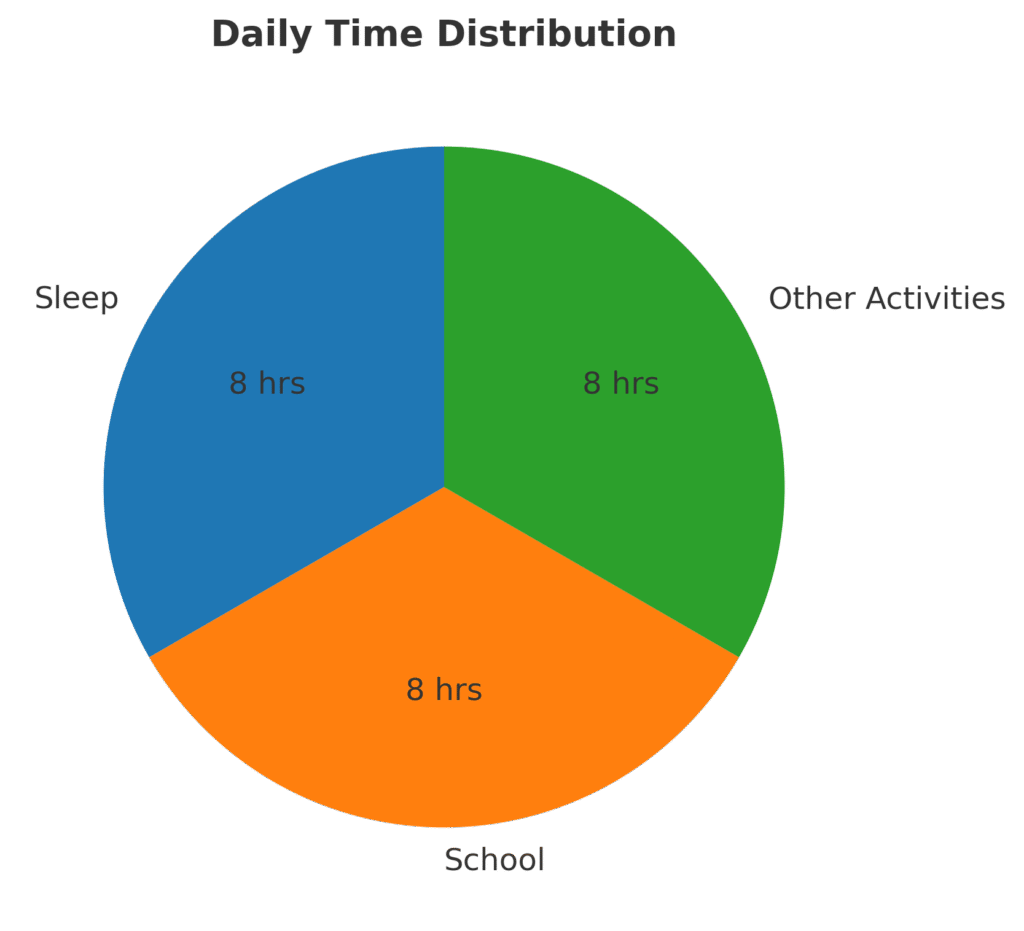
Yes, you likely have 8 hours of free time every day. That’s a lot—if used wisely. Now break your free time into chunks. Allocate time for study, rest, hobbies, chores, and relaxation. Don’t just go with the flow—set a rough time limit for each activity.
Example: You need 2 hours to revise a chapter. But if you give yourself only 1 focused hour, you’ll naturally avoid distractions and work more efficiently.
Be careful not to set unrealistic goals. It’s okay if you don’t get it perfect right away. Start small and improve over time.
 Final Thoughts: Start Small, Stay Consistent
The principles of Planning, Prioritizing, and Time Management may seem simple—but applying them every day takes effort and intention. Once you start, you’ll feel more in control of your day and less stressed. These skills won’t just help you in school—they’ll help you for life.
 Key Takeaways
- Productivity is about managing time and focus—not doing more.
- Start by planning your day. List your activities clearly.
- Prioritize tasks based on importance.
- Manage your time with focus blocks and avoid distractions.
- Consistency is more important than perfection.
 Coming Next
In the next blog, we’ll dive into other key topics related to managing your schedule to help you stay on top of everything. Stay tuned!